01 · Understanding students
Start with the experience of seeking help.
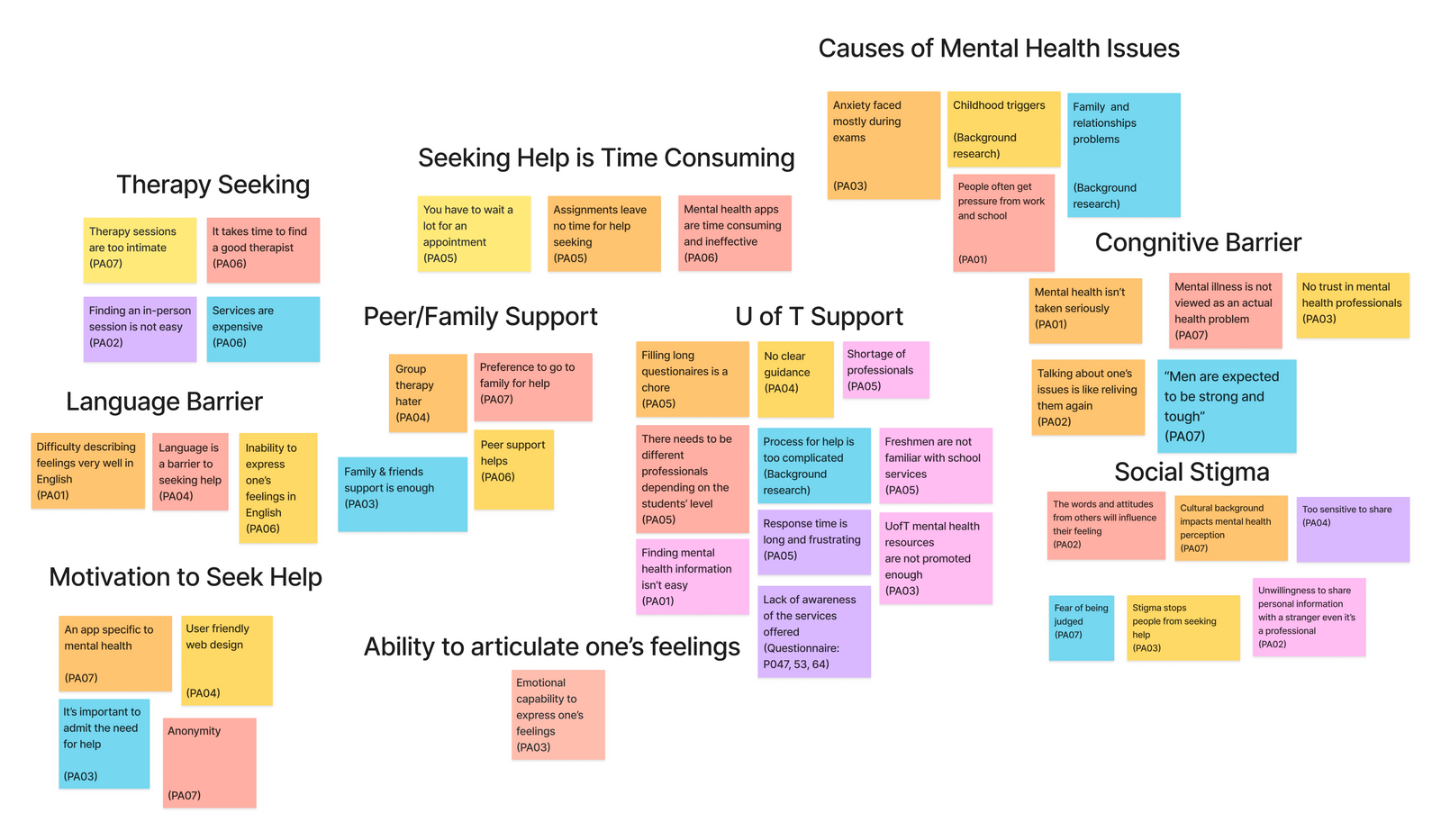
Working with a six-person student team and U of T’s Innovation Hub, we explored students’ views of existing services, their awareness of mental health resources, and their attitudes towards seeking support.
- 74
- survey responses
- 5
- semi-structured interviews
- 6
- student team members
In our survey sample, 12 of 74 respondents said they used U of T mental health support. The study surfaced barriers including stigma, cost, self-reliance, and limited awareness of resources.
These were findings from our project sample, not estimates of the whole student population. I led the analysis and helped bring the qualitative and quantitative material together.
02 · Shaping the concept
Move from a feature list to moments of support.
A research-based persona helped the team connect the findings to a student experience. We generated ideas, then reviewed them for feasibility and potential impact.
The concept focused on three connected needs:
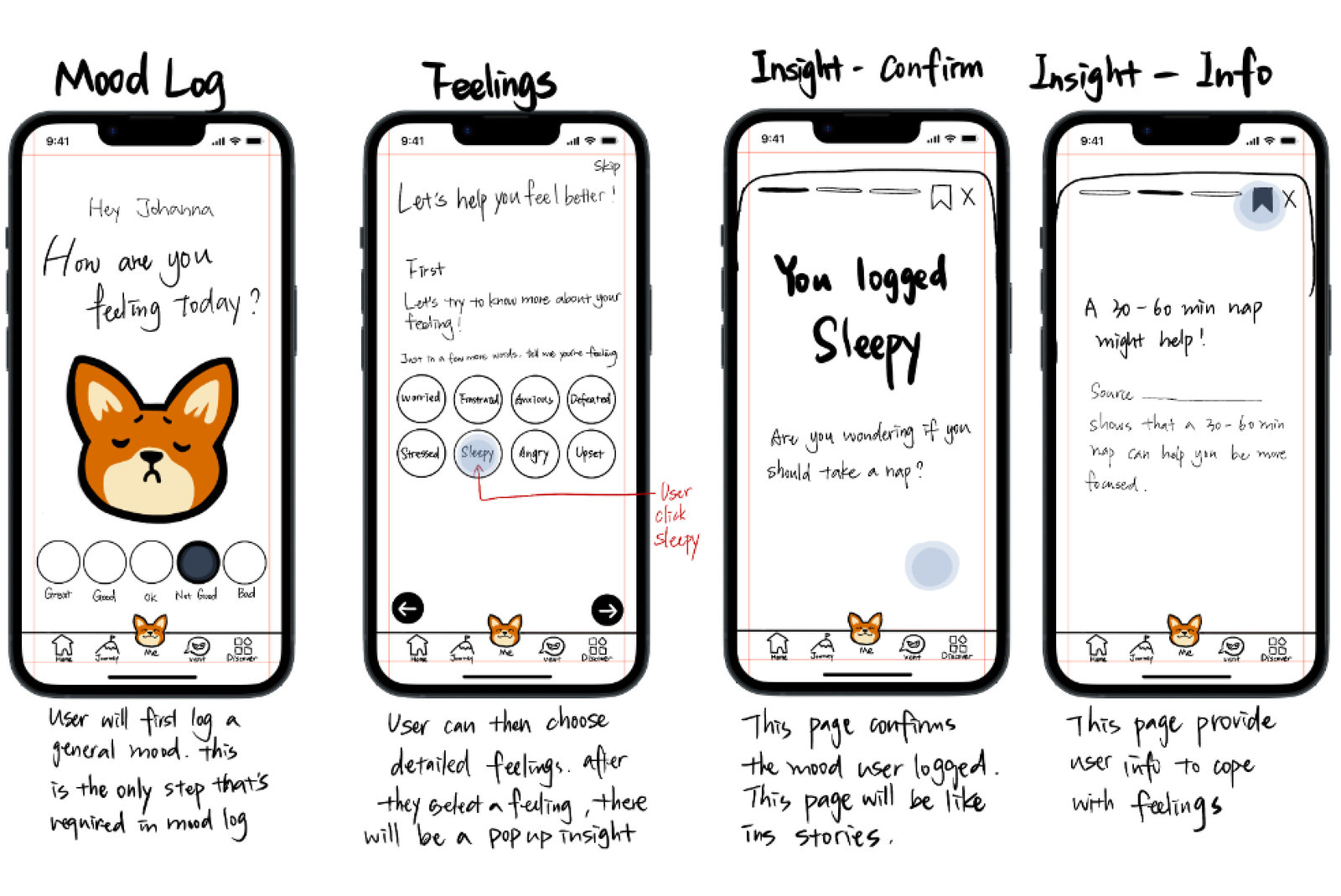
- Record moods and receive short, relevant insights.
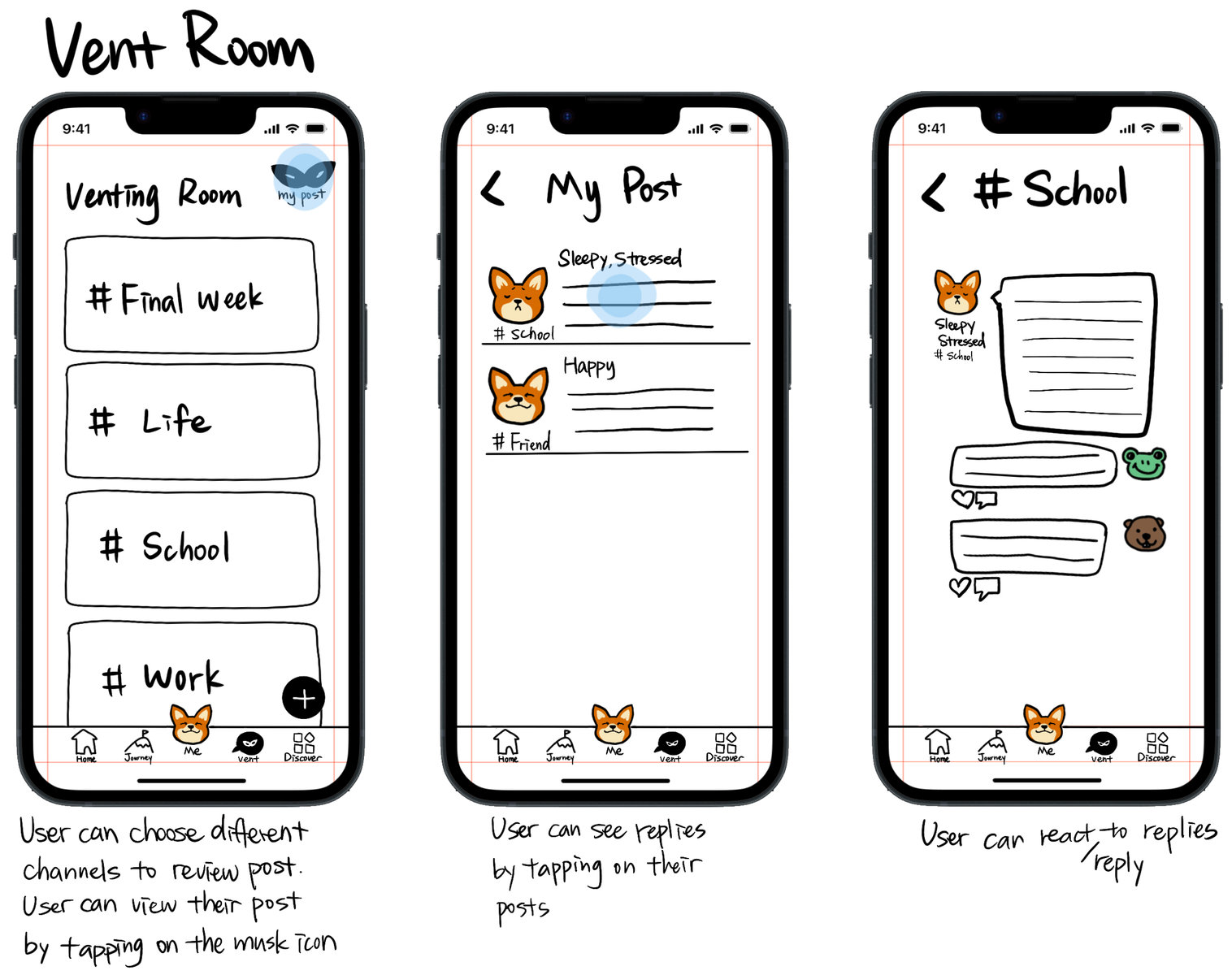
- Share thoughts and feelings anonymously through a peer space.
- Find appropriate resources without a lengthy search.
My interviewing, analysis, and testing work helped inform the direction as the team moved from initial ideas to prototypes.
03 · Prototyping & evaluation
Use each round to change the next one.
Start with low-fidelity flows.
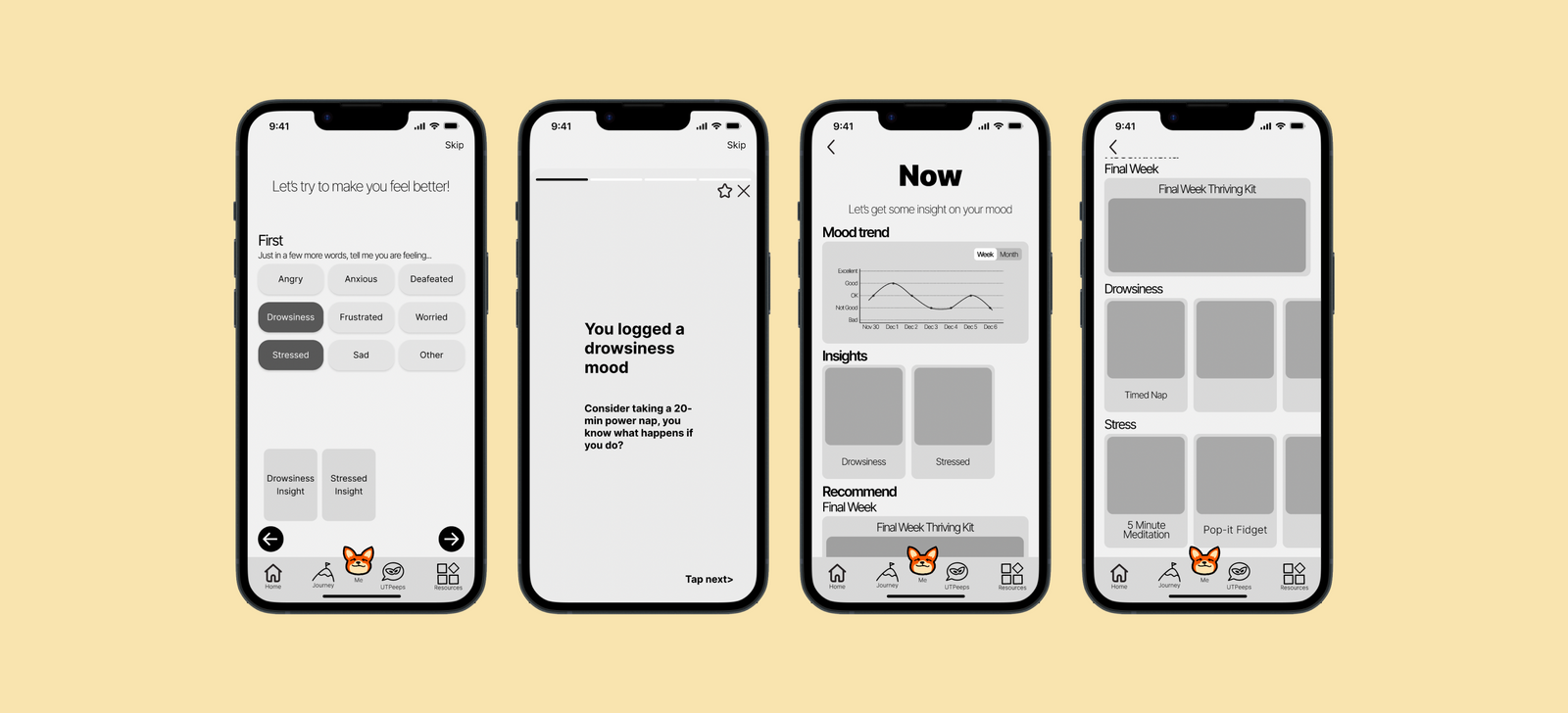
We conducted four lean evaluations using early sketches. Participants responded positively to insights after the mood log and the option of anonymous venting, while asking for changes to the sequence and community features.
Refine the clickable prototype.
We then conducted six evaluations with four tasks covering the mood log, community, resource access, and starting a journey. A five-second test, task observation, and semi-structured interviews informed the assessment.
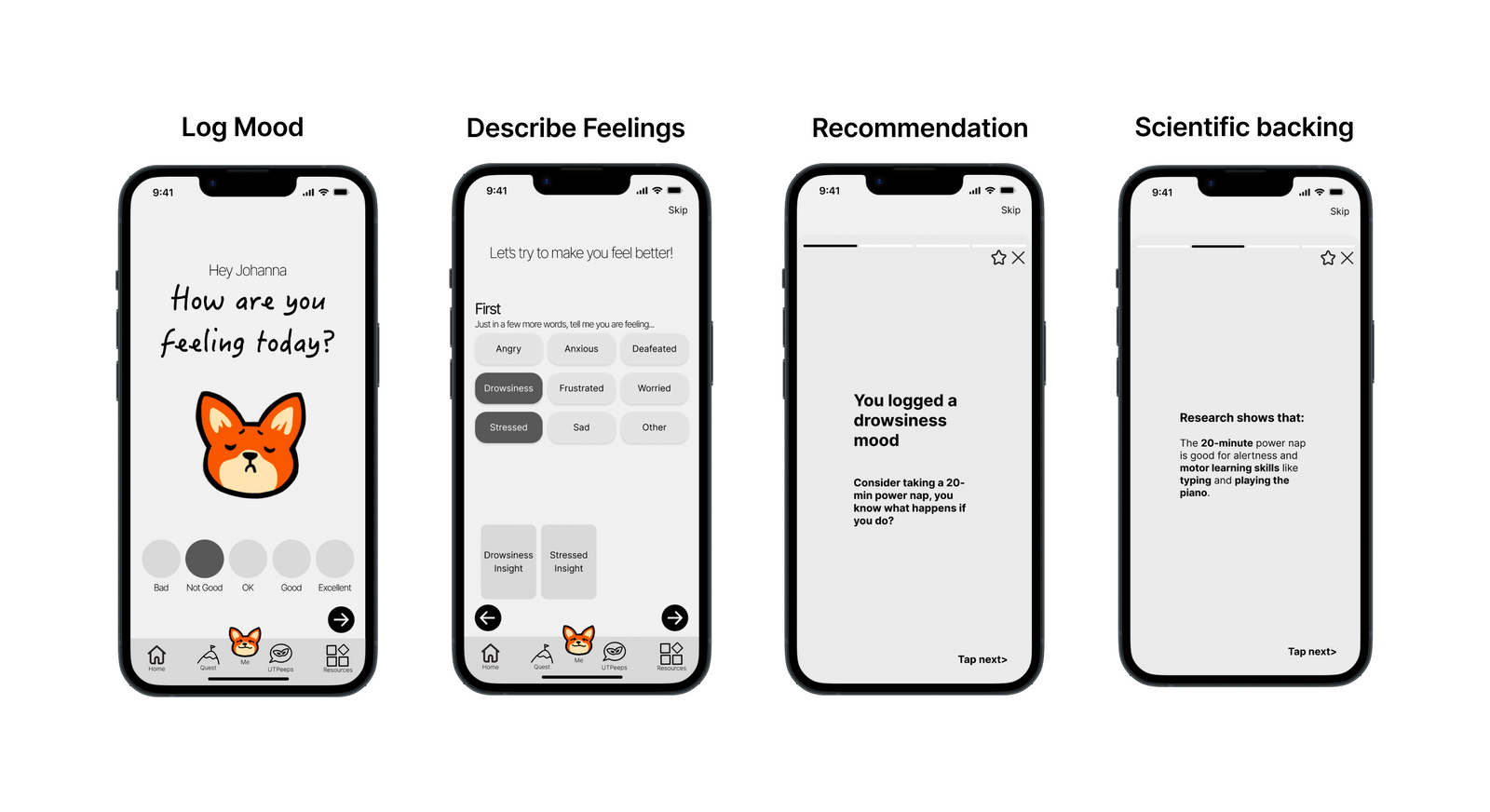
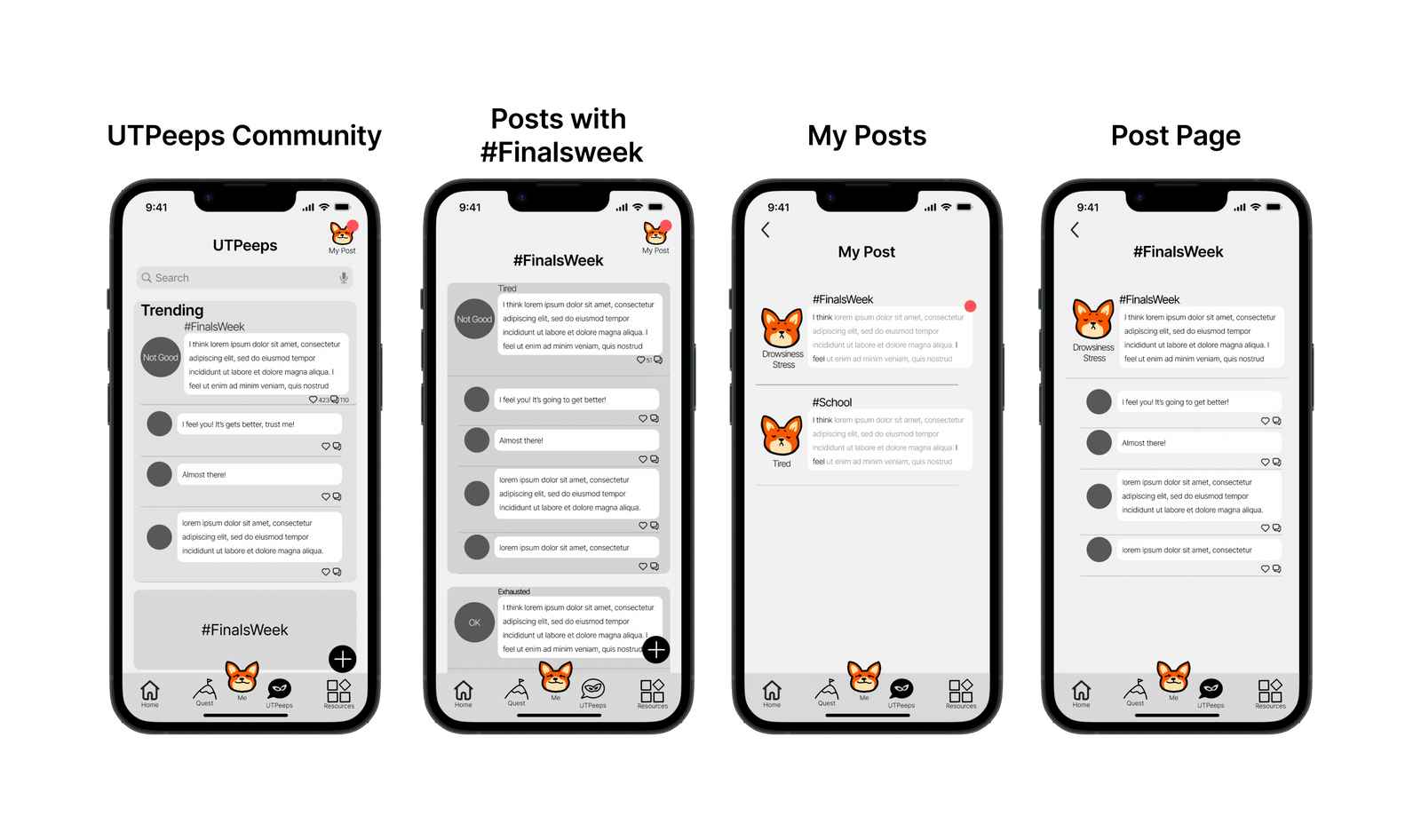
Feedback informed the ordering of insights and additional community components. Participants also identified language that could be triggering and features that felt overwhelming when dealing with negative emotions.
04 · Outcomes & next steps
A supportive experience needs careful editing.
The outcome was an evaluated app concept, with a clearer set of changes to pursue: simplify busy screens, review language with a mental health professional, and distinguish peer comments from medical advice.
The project also identified further work on gamification and rewards. The project produced an academic prototype and priorities for further design and professional review.
My team was Huiwen Lu, Yue Fang, Yuhan Zhao, Nayanika Goje, Kehan Tan, and me.